Content & Model Designer
Jess L'Esperance
I define how AI communicates with people by translating what models are capable of into what people actually want and respond to. Its personality, how it sounds, what it shares, and how it makes you feel. I've led design teams at Meta and Huge, and now I am a model designer working on Gemini.
"When nothing is fixed and everything is fluid, language is the design."
I thrive in the in-between space, where the problem is still being defined and the stakes of getting it right are highest. That's where I do my best work, especially around 0 to 1.
In my experience, most model quality problems are actually design problems and they happen upstream. I partner closely with researchers, engineers, PMs, and policy teams to get alignment on what good looks like before anyone writes a single instruction.
A lot of this work is invisible to users. The way a model responds with warmth at the right moment, organizes information into a table so it's easy to compare options, or perfectly anticipates the right next question… that's not accidental. It's designed. I obsess over how people respond to language and visual data, then instruct the model on delivering the right things at the right time.
I hold a high bar for what we ship: responses that are helpful, factual, and trustworthy aren't a nice-to-have, they're the whole point.
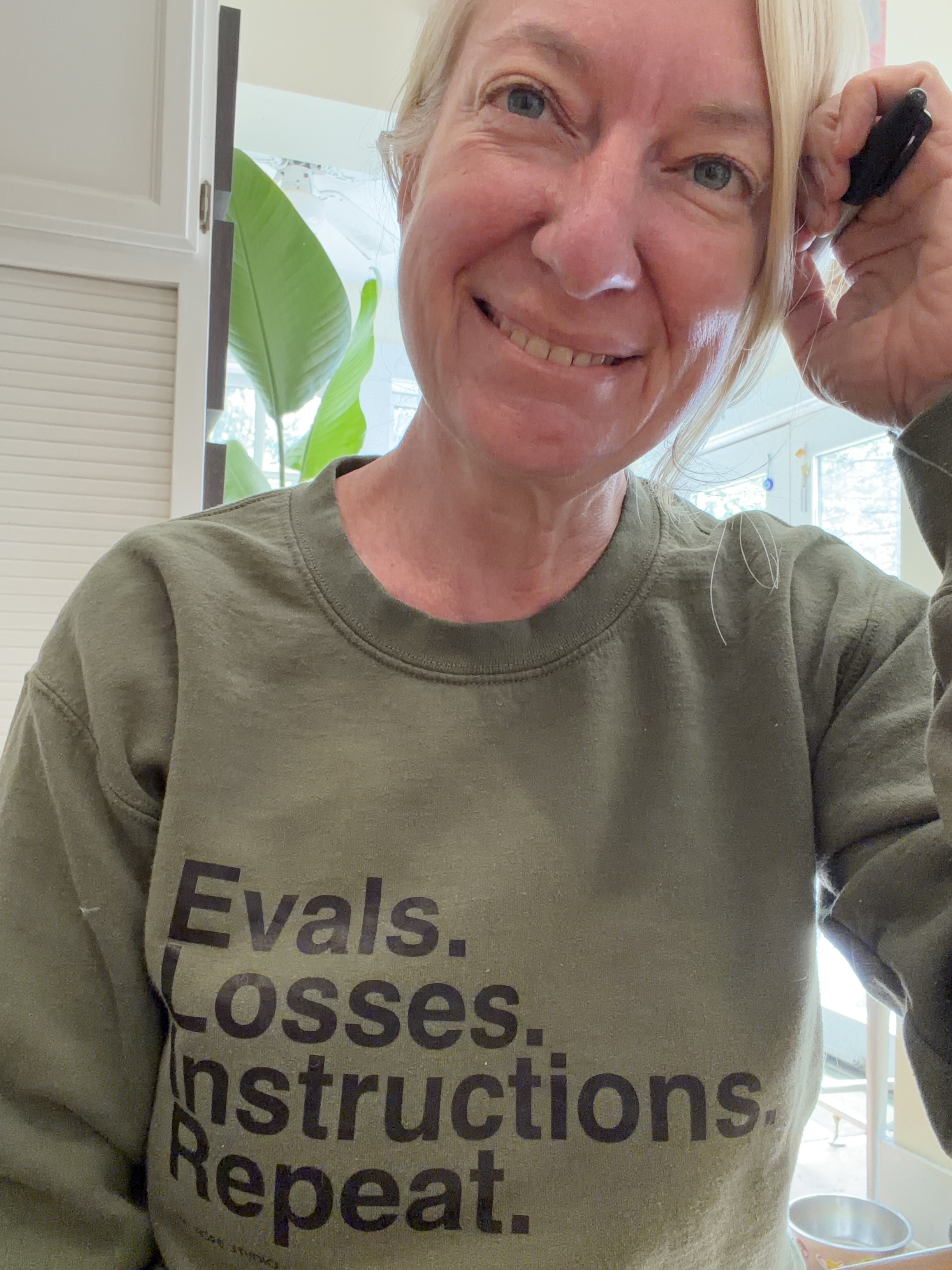
That's what my sweatshirt says. It also happens to describe my entire job. I'm a model designer — a title that didn't exist five years ago and still raises eyebrows at dinner parties. It sits at the intersection of UX, prompt engineering, behavioral design, and something that doesn't quite have a name yet.
This is the first in a series about designing the user experience of AI.
This work is shared selectively. Enter the password to view case studies.
Incorrect password. Try again.
I came up as a travel writer and editor — drawn to how language shapes the way people understand the world. A master's in information science deepened that into something more precise: how people use information to make decisions, and what happens when the structure of that information works against them. That led to interaction design, content strategy, and eventually model design — each one the same problem, further upstream.
Reach out via email or LinkedIn — I'd love to hear from you.